
How to Light Your Residential Flagpole
According to the U.S. Flag Code, the American flag should be properly illuminated if flown at night. Beyond etiquette, flagpole lighting adds elegance and a focal point to your yard. It complements your home’s landscape lighting design and elevates your property’s nighttime and curb appeal.
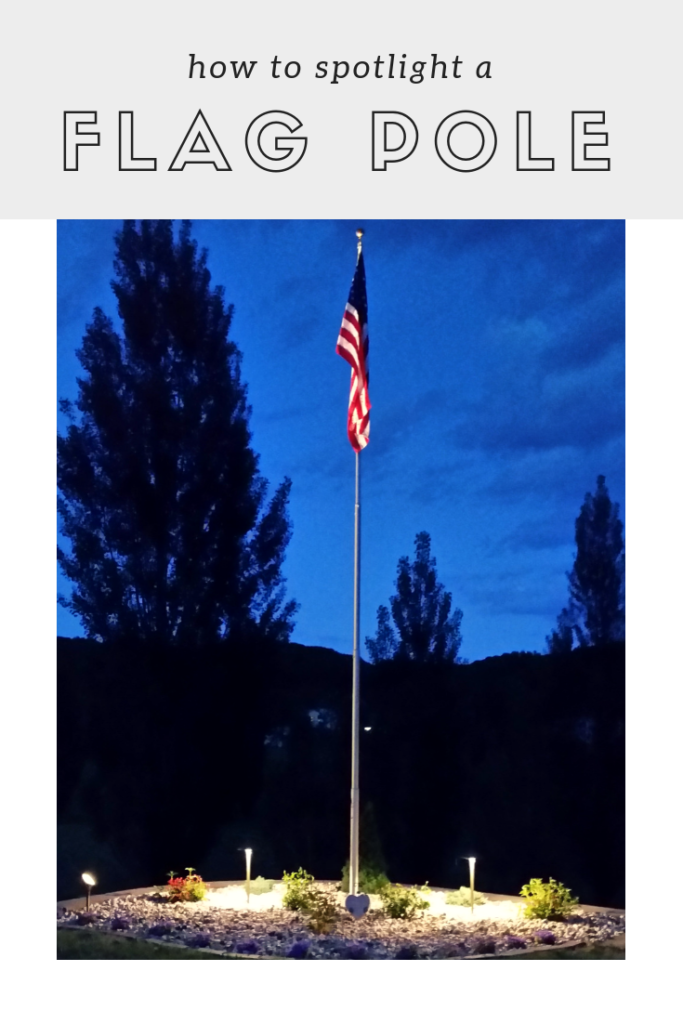
How to Light a Flagpole: Step-by-Step Guide
Outdoor flagpole lighting isn’t just about flipping a switch—it’s about showcasing your flag with clarity, honor, and style.
Whether you’re installing a new landscape lighting setup or upgrading an old one, this step-by-step guide will walk you through everything you need to create a striking, respectful, and reliable flag display when the sun sets.
- Choose the Right Fixtures
To get started, you’ll want to use uplighting—fixtures that shine upward from the ground to highlight tall vertical structures. The most common types of lights for flagpoles are:
a) Spotlights (also called directional lights): Spotlights are ideal for focused beams aimed directly at the flag.
b) Well Lights: Discreet, outdoor in-ground lights are great choices for a clean look with minimal visibility of the hardware.
c) Flood Lights: Flood lights are better for wider coverage if your flag is large or makes wide waving motions.
Look for LED landscape lights with adjustable angles and weatherproof ratings, such as IP65 or higher, to withstand outdoor conditions.
You can also consider a solar flag pole light for an easy, wire-free setup. These fixtures charge during the day and automatically illuminate your flag at night—perfect for locations without nearby power sources. - Placement is Key
For poles up to 20 feet, one or two spotlights placed 6–8 feet from the base at about a 45-degree angle usually does the trick. Taller flagpoles (25 feet and up) may require two to three lights for full coverage, especially if the flag is large or double-sided.
Pro Tip: Place fixtures on opposite sides of the pole to ensure full illumination and reduce shadows as the flag moves. - Pick the Right Brightness and Color Temperature
For residential settings, aim for 100–300 lumens per fixture. This range gives a clean, defined look without overpowering your yard. For commercial or civic buildings, you might go higher. Learn more about the differences between lumens versus watts in our guide.
Choose a landscape lighting color temperature of around 3000K to 4000K. This gives a bright, neutral white light that makes colors pop without appearing too cool or blue-toned. - Don’t Forget the Wiring
Use low-voltage landscape lighting transformers to safely power your setup.
Bury wires properly using burial-rated wire and waterproof connectors, and make sure to plan around your existing landscape layout to avoid damaging roots or irrigation systems. - Add a Timer or Photocell
Automation is your friend. Use a photocell sensor to turn the lights on at dusk and off at dawn, or install a landscape lighting timer for precise control. This ensures your flag is always lit when it needs to be—without the hassle of manual switching.
Flagpole Lighting: Shine a Light on What Matters
Lighting your flagpole isn’t just about compliance—it’s a design choice that speaks volumes. With the right placement, fixtures, and setup, you can turn a simple pole into a proud, glowing centerpiece that blends seamlessly into your overall landscape lighting plan.